NEWS
Apr 2015 - The board of The Ethiopia Fund has recently returned from its fourth annual trip to Ethiopia. You can read the trip summary describing our experiences this time around in both English and Norwegian.
Mar 2015 - WAHA have released their Financial and activity report for support given by The Ethiopia Fund for the period of December 2014 - February 2015. You can read it here.
They have also released their proposal and plans for the next 12 months of support. For the full breakdown of the proposal and the budget, please read the report here.
Nov 2014 - Midwife Annie Bratsberg Ones runs a private midwifery practice where she offers her services as a traveling midwife. Her service is called "Min jordmor - på jul" (translation: My midwife - on wheels), and she has pledged to donate 5 % of her income through this service to The Ethiopia Fund.
Oct 2014 - Read this touching story (in Norwegian) "Tilbake til livet" published in Norad's newsletter Bistandsaktuelt, written by Sofi Lundin after her visit with fistula women in Asella.
Also see this article in Newsweek "The Afterbirth Miracle" about Dr Mulu Muleta, the leading fistula surgeon who The Ethiopia Fund is working closely with through WAHA. It's normal for successful surgeons from developing countries to leave their home nation in search of a better life, but this is not a though that has crossed Muleta's mind. She has operated on and helped more than 10,000 fistula women in her home country of Ethiopia.
Sept 2014 - WAHA have released their Financial and activity report for support given by The Ethiopia Fund for the period of June - August. You can read it here.
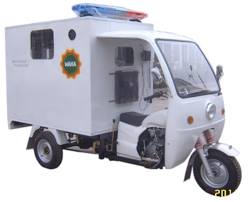
Aug 2014 - The Kavli Trust has donated NOK 100,000 towards the purchase of 5 ambulance motorcycles which will be used in the mountain regions around Asella. They will be used to transport women with pregnancy related complications to the hospital. This transport ability will help save the lives of both mothers and their children, as well as help prevent serious injuries such as fistulas.
The week of the 22nd August The Ethiopia Fund will be visited by 2 of the world's foremost fistula surgeons: Dr Mulu Muleta and Dr Ambaye from WAHA Ethiopia. They are, amongst other things, holding a fistula workshop at the Women's Clinic in Bergen. Dr Muleta is an international consultant for the Clinic's national treatment centre for fistula. Se the video below where Muleta together with Catherine Hamlin and Tadessa from Desta Mender explain why fistulas occur, how they affect a woman's life, and how a relatively simply procedure can give them back a worthy life.
Bergens Tidende, the local newspaper for Bergen, has published an article featuring The Ethiopia Fund and the visit from Dr Mulu Muleta and Dr Ambaye. Read it here.
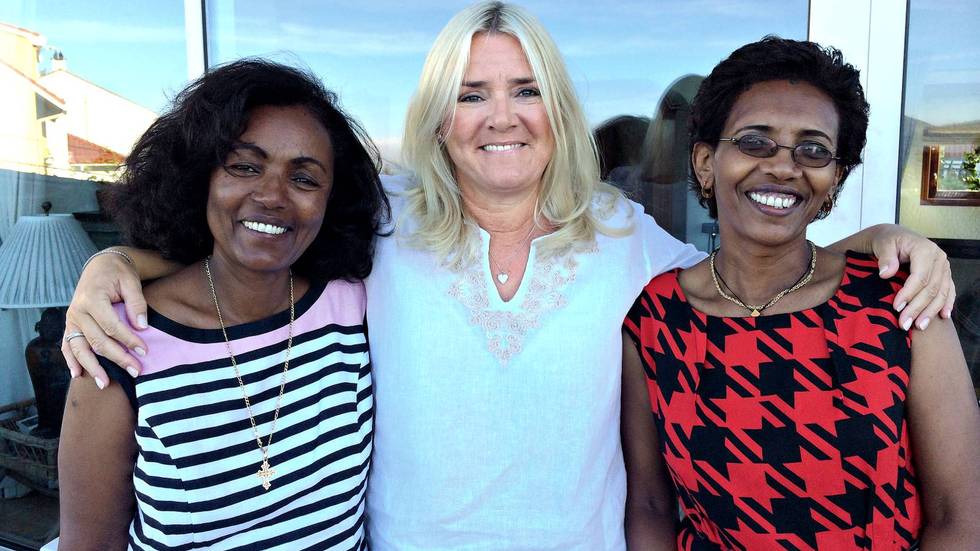
From the left: Inger Elise Iversen, Dr Ambaye, Elna-Kathrine Grieg, Dr Mulu Muleta, and Kari Woldseth. Then with the beautiful view from Ulriken in Bergen: Dr Ambaye, Anne Berge Pedersen, and Dr Mulu Muleta.
|
Jul 2014 - Please see the annual report and financial statement (in Norwegian only) for The Ethiopia Fund for 2013.
May 2014 - The Grieg Foundation has pledged new financial support for 2014: a donation of NOK 300,000 towards the fistula work in Asella, and a donation of NOK 200,000 towards the education of two new midwives at The Hamlin College in Addis Ababa.
WAHA have released their Financial and activity report for support given by The Ethiopia Fund for the period of March - May. You can read it here.
WAHA have released their proposal and plans for the next 12 months for the continued training and work of preventing and treating fistula injuries at the Assella School of Health. The proposed budget calls for $105,000/NOK 633,000 and includes the fistula treatments themselves, the reintagration of women after surgery, upgrades for the operating room , and a part-time gynaecologist, amongst others. For the full breakdown of the proposal and the budget, please read the report here.
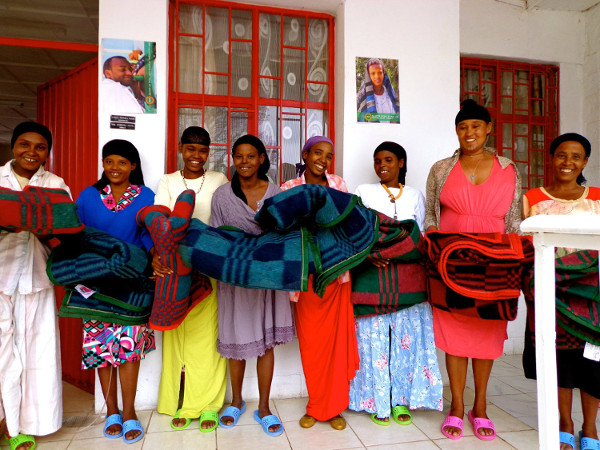
Mar 2014 - Dearest women! Happy International Women's Day! A joyous message to you all from the fistula department in Asella where 8 former fistula-sufferers have now been operated on. They stand here today recovered from their injuries and dressed in clothes donated by supportes in Bergen, Norway. They will soon be ready to return to their villages to start their new and improved lives without leakage, suffering, and shame. What joy!
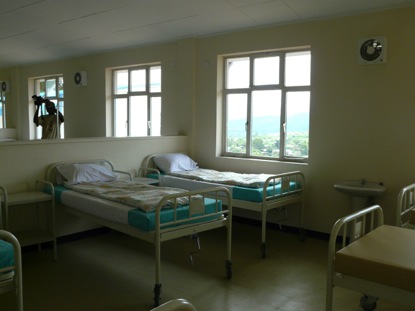
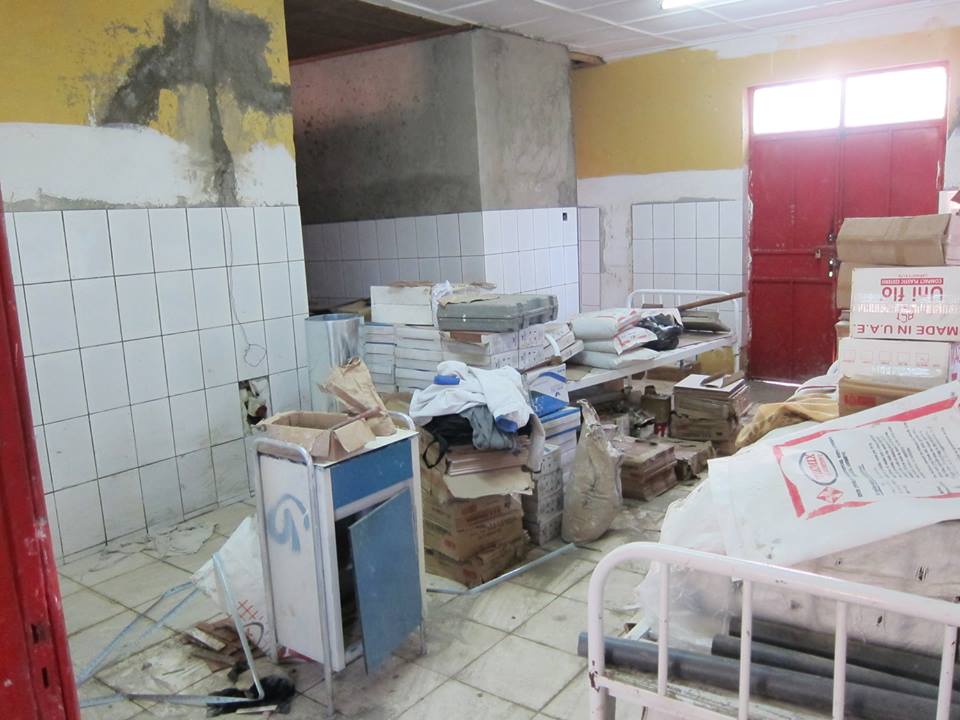
Mar 2014 - With support from the Ethiopia Fund, WAHA has completed renovation works and the installation of a resting area and garden facilities at the Assella Fistula Center, with the objective of providing a more comfortable and functional environment for patients and personnel. Link to update on WAHA-international.org here.
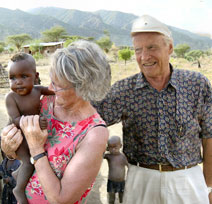
Feb 2014 - We have returned after another fantastic trip to Ethiopia. We wish you could all experience the wonderful warmth, the happiness, and the gratitude offered to us by the the fistula women on behalf of all the supporters of The Ethiopia Fund. We would like to thank each and every one of you for the fantastic support you have given, both in the form of monetary donations and beautiful home-knitted quilts. It is so rewarding to see the results of your contributions.
Dr. Mulu Muleta has written a touching thank-you letter which you can read here.
The Ethiopia Fund is now giving support to all the surgeries at the fistula department in Asella (financing ca. 150 operations a year), as well as supporting the education of financially struggling midwive students at the University of Asella. If you wish to join us in supporting the cause we would be eternally grateful! 100% of all donations goes directly towards helping the fistula women.
Dec 2013 - WAHA have released their Financial and activity report for support given by The Ethiopia Fund for the period of October - December. You can read it here.
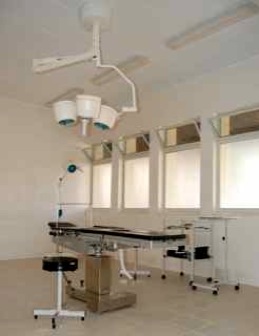
Nov 2013 - The Fistula Department at the Asella School of Health in Ethiopia is currently being renovated. These renovations have been fully backed by The Ethiopia Fund, and without our supporters, these works would not have been made possible. Thank you for your contributions!
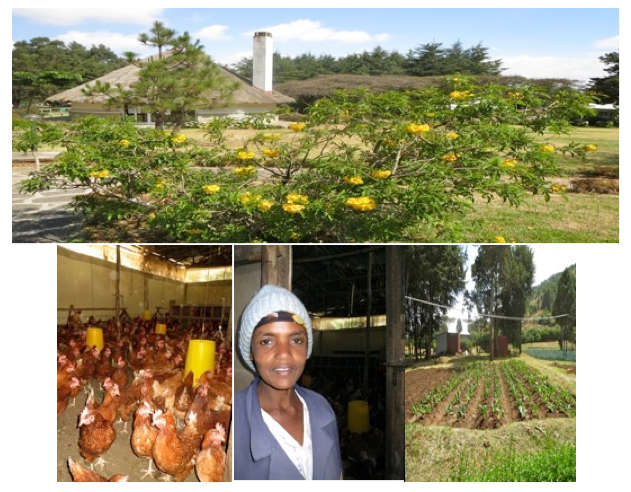
Oct 2013 - Desta Mender (Village of Joy) is a center where women with chronic, long-term injuries who are unable to return home can come and live together. The women are trained in various basic skills, such as agriculture, literacy, business, and mathematics, in an attempt to prepare them for self-reliance and integration back into society. During our visit we saw the results of our 2012 donation of €7,000, which included the upgrading of the chicken farm. The poultry house now houses 400 chickens.
The Ethiopia Fund’s support also covered the artificial insemination of cows, and there have been 4 new calves and three further livestock pregnancies. They now produce enough milk to cover both the Desta Mender centre and the Fistula Hospital in Addis.
A newproject we are now supporting at Desta Mender is the expansion of an on-campus cafe run by the fistula women, known as the Birtat Cafe. Please see this link for more information.
Sept 2013 - WAHA have released their Financial and activity report for support given by The Ethiopia Fund for the period of June - September. You can read it here.
We have the pleasure of announcing a new member on the board of The Ethiopia Fund, Dr. Thomas Hovstad. He is a cardiologist at Haukeland University Hospital in Bergen, and has recently spent 6 months in Jemen serving for Doctors Without Borders.
We've started supporting two midwife students attending The Hamlin College of Midwives in Addis Ababa in the strategy for the prevention of obstetric fistula and improving the maternal health of women in rural Ethiopia. The two students, Kidan and Neima, will receive their Bachelor degrees in Midwifery after 4 years of training. Once they graduate they are obligated to serve their local community for a period of 4 years before they will be given their Diplomas and transcripts.
The cost of supporting each studen is $4,000 USD/year. This covers:·
- Boarding service
- Food (three meals per day)
- Salary for academic and non academic staff
- Long duration of far field practice (demanded by the curriculum) to correlate theoretical session with the actual rural health care settings (accommodation, transport, meal, perdiem, etc).
- Handout for every course in the curriculum
- Transporting students' and staff to health centers and hospitals during clinical attachment
- Full coverage of health care services
- Uniform including shoes and other supplies
- Items related to personal cleanliness ( tissue paper, soap)
- Payment for part-time teachers as some the courses demand to have sub-specialty
- Other running cost
- 24 hrs a day and 7 days a week internet service both for the staff and students
- Graduation ceremony
- Extracurricular activities (great Ethiopia run, Nation Nationality day celebration, etc, every year)
A copy of the agreement between The Ethiopia Fund and The Hamlin College of Midwives can be seen here.
Aug 2013 - Please see the annual report and financial statement (in Norwegian only) for The Ethiopia Fund for 2012.
Jun 2013 - WAHA have released their Financial and activity report for the period of April - June for the new fistula project that The Ethiopia Fund is supporting in Asella. You can read it here.
May 2013 - A wonderful video about obstetric fistula has been relased by Johnson & Johnson and shared by Women and Health Alliance International (WAHA). The video features WAHA's Dr. Mulu Muleta and Dr. Cathrine Hamlin, both expert fistula surgeons who The Ethiopia Fund supports. Dr. Muleta spearheads WAHA activities in Ethiopia and has lead fistula care camps throughout the country.
Apr 2013 -
We are happy to announce that we have started a new cooperation with WAHA - Women and Health Alliance International. WAHA is an organization that runs projects for women's health in some of the world's poorest countries. In Ethiopia they run fistula departments in three hospitals: in Gondar, Jimma, and Asella. Dr. Mulu Muleta and Dr. Ambaye, both Ethiopian, are two of the world's leading fistula surgeons. They both operate at and train new gynaecologists in fistula surgery at the three departments run by the organization.
Dr. Muleta is well known in Bergen where she completed her PhD on obstetric Fistula in 2010, and she has worked closely with gynaecologists in Bergen researching fistula prevention. Since 2011, Dr. Muleta has been an international consultant at The National Treatment Center for Gynecological
Fistula at Kvinneklinikken Bergen (KK). In her role as a consultant, she has taken part in seminar days and has been responsible for fistula training in Ethiopia of some gynaecologists from KK.
WAHA provides financial backing for the building and the ongoing work of the fistula departments that Dr. Muleta and Dr. Ambaye run in Ethiopia, as well as support for research seminars where National Treatment Center for Gynecological Fistula KK have planned their projects.
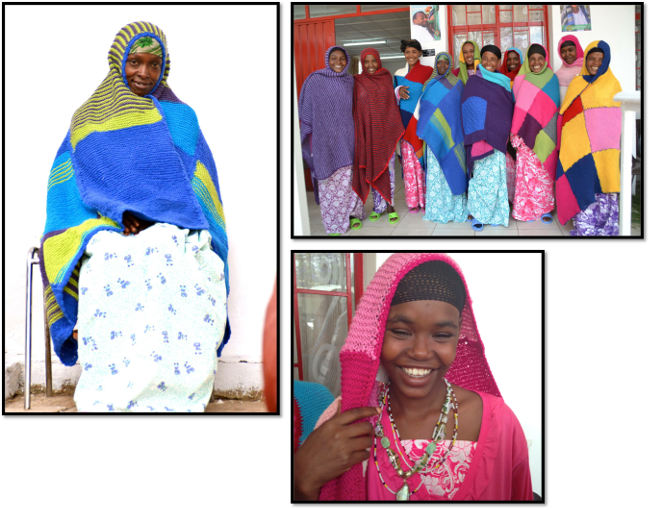
Mar 2013 - People in Norway have started knitting colourful blankets for the fistula ward in Asella. We've had very generous inpouring of contributions from a wide range of people: our youngest knitter is 9 years old and our oldest 96! These blankets will be our priority to bring when we go back to visit Ethiopia in January 2014.
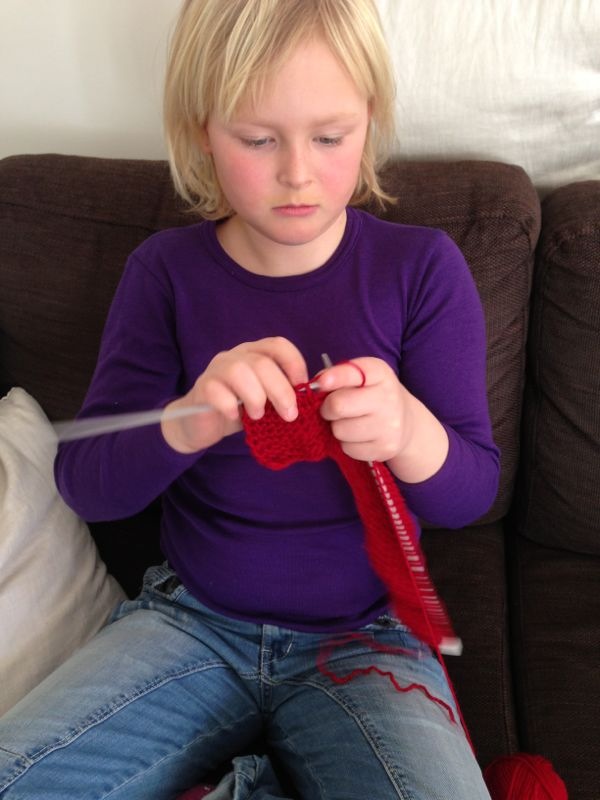

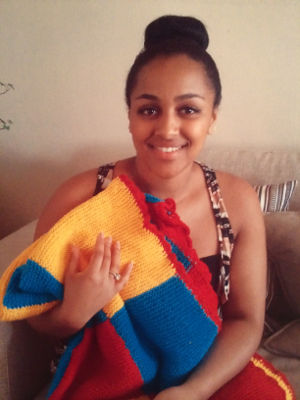
Left: Youngest knitter to contribute, Hanna Charlotte.
Right:
Makeda Dyhre holding the blanket knitted by her grandmother Astrid Halvorsen.
If you would like to knit a blanket please see these guidelines on how they can be made.
Feb 2013 - The board of The Ethiopia Fund has once again had a wonderful trip to Ethiopia where we met with Dr Mulu Muleta (Waha). During our trip we had the opportunity of meeting the Fistula women at the Asella Hospital (southeast of Ethiopia's capital, Addis Ababa), as well as Desta Mender and The Hamlin College of Midwives.
Please read all about our trip and our new projects in the trip report (in Norwegian or English)
Dec 2012 - We are sad to announce that the new surgeon who was employed at Arba Minch Hospital getting training in fistula surgery at The Fistula Hospital in Yirgalem has resigned. Therefore, the Fistula ward at Arba Minch cannot re-open for surgery. It now works more like a waiting area where the women come, are examined, and stay until they are transported to Yirgalem. Since June 2012, 5 to 10 women per month have been transferred to Yirgalem (in the car that we upgraded) for their operations. Unfortunately this must continue so for the time being until it is possible to find a new surgeon. Sadly this is a difficult matter as there are such few surgeons in Ethiopia.
The Ethiopia Fund has therefore found a new fistula department at Asella hospital (175 km outside Addis Ababa) which is in great need of support. This is run through the existing organisation called Waha (Women and Health Alliance International). Our contact person here is Dr Mulu Muleta who is one of the best Fistula surgeons in the world. She has published several articles in medical journals and took her PhD in Bergen in 2010 and is well known to many of us. We will meet up with her in Ethiopia in February 2013 to have a look at the new project as well as Desta Mender and The Hamlin College of Midwives. We are so excited!
Oct 2012 - Sadly we have have to inform you that Dr. Amenu (the gynaecologist and Fistula surgeon at Arba Minch Hospital) suffered a stroke a few weeks ago resulting in partial paralysis of his right side. He has recovered significantly since then, but he is still struggling with reduced power in his right hand and hips. Although he is much better now compared to just after the stroke, he is not yet in a position to be able to return to work. Therefore, the Fistula ward is temporarily closed and all new and existing patients are being transferred to the Fistula department in Yirga Alem using the Toyota Land Cruiser which was upgraded with funds donated to The Ethiopia Fund. As it is uncertain exactly when Dr. Amenu will be able to return to the department, a newly qualified gynaecologist has been employed at Arba Minch Hospital. The plan is for him to soon travel to Yirga Alem or the Hamlin Fistula Hospital in Addis Ababa in order to be trained in Fistula surgery so that, in addition to his existing responsibilites, he can also take over the Fistula work of Dr. Amenu.
Jul 2012 - Wonderful news! The aim for 2012 was to treat at least 60 Fistula women over the course of the year, but in the first three months more than 30 women had been operated on. This is effectively a doubling of the planned number of operations for the year, and it is impressive considering there is only a single gynaecologist at Arba Minch hospital, Dr Amenu. Our plan is to hire a second gynecologist to come to Arba Minch one week a month or, if possible, to employ one full time. Dr. Bernt Lindtjørn (www.lindtjorn.no) is working on this recruitment at the moment.
Jun 2012 - Donations to date now approaching an amazing 1,000,000 NOK. Support is coming from a wide variety of sources, including collective donations from companies, donations from individuals, and people referring gift giving to us when celebrating special occasions such as birthdays and weddings.
Apr 2012 - Now received donations from over 4,000 CDs.
Feb 2012 - Donations to date now exceeding 600,000 NOK.
Jan 2012 - Ethiopia Fund is registered in the Norwegian index for organizations (Brønnøysundregistrene) and in the Control Committee for Fundraising in Norway (Innsamlingskontrollen).
Sep 2011 - Now received donations from over 2,000 CDs
Jun 2010 - 800 CDs now donated away with total donations exceeding £40,000!
Jun 2010 - A further 2500 CDs will be printed for free forming a generous donation from a family in the USA.
Jun 2010 - For more information about the project see www.lindtjorn.no where you can read all about the work at the hospital in Arba Minch and thee associated health centres out in the rural areas.
Dec 2009 - 350 CDs donated away in the first week.
Dec 2009 - Facebook group created. Join here!
Dec 2009 - News about the project spread through friends friends, family's family...forwarding information about the project to their e-mail adress contacts.
BACKGROUND
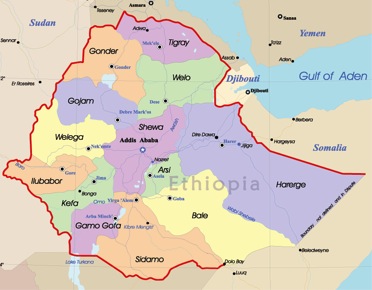 Ethiopia is a beautiful country with a population of more than 80 million people. As one of the most impoverished places in the world, maternal deaths and disabilities are among the highest in Sub-Saharan Africa.
The women of Ethiopia seriously lack medical care, especially in obstetrics as there is only a handful of hospitals and only one specialist in gynaecology and obstetrics per 1.8 million people. 90% of its 80 million people live in rural areas making availability of health services extremely scarce. Many women die during delivery (720 out of 100,000 live births) but higher still is the number of women who survive childbirth only to sustain serious injuries and permanent damage to their health, such as obstetric fistulas. Per today 100,000 women suffer untreated fistulas in Ethiopia and another 9,000 develop fistulas every year.
A fistula can occur if a woman does not receive obstetric care when complications arise during labour. If the baby’s body becomes stuck in the pelvis over a long period of time, if malpresentation occurs, or if contractions gradually cease, the constant pressure will interrupt blood circulation and the surrounding tissue can die. A hole then develops between the vagina and the bladder (and/or rectum) resulting in such severe internal injuries that they are no longer able to control their bodily functions. This results in the women experiencing chronic leakage of urine and/or faeces.
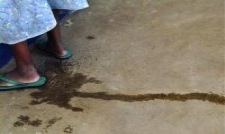 In addition to the leakage, she will also suffer kidney and skin infections, and due to having to squat for periods of time measured in days while enduring painful labour contractions she can suffer nerve damage in the legs which could cause paralysis and disability. Ultimately the baby is unlikely to survive. If, in the case the woman herself survives, her husband and society at large will most likely reject her because of the foul condition left behind by the chronic leakage and her inability to bear more children. She will soon be shunned by her community and forced to live an isolated existence with profound psychological trauma; she is forced to live in sorrow, shame, and tremendous poverty. Often her community also believes her condition is the result of being cursed or having sinned, and unfortunately she believes it too.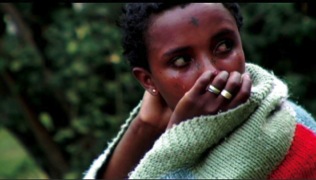
Countries with a well run health care system hardly have this problem, since emergency Caesarean section or other emergency measures are performed if there are any dangers to the mother or child during labour and delivery. But in Ethiopia's remote regions, women don't have anyone to help them if there are complications during birth.
Fistulas are relatively easy to repair but as the majority of cases are complex the surgeon needs special training. The longer a patient waits untreated the more difficult the surgeon's job becomes and scarring is to blame for this. However, according to the World Health Organisation, 90% of cases can be healed. The operation costs around NOK 1200-1500 and includes post-operative care and physical therapy to strengthen the pelvic muscles and/or paralysis of the legs. With her fistula repaired a woman can return to a normal life and be freed from her physical and psychological torment. She can become productive, get married and give birth again as long as it's by caesarean section. Healed women are thus no longer affected by rejection, poverty, and all the misery caused by this heart breaking childbirth injury.
Please help support our cause so we can together help stop the suffering and give these women the dignity and quality of life they deserve.
The first CD recorded, “Singing for the Women of Ethiopia” (December 2007), has been distributed to 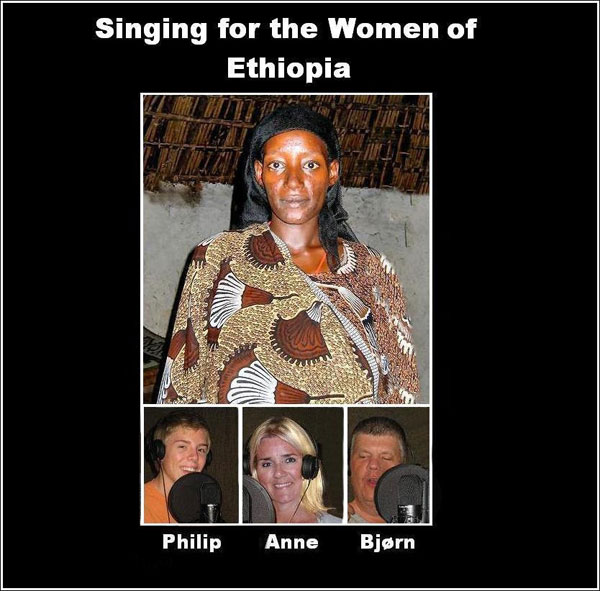 many parts of the world and all donations received have supported the education of midwives and health officers. Specifically, 200 midwives and 35 health officers have finished their training and have started working at the 10 small hospitals/health centres that have been built out in the rural areas in connection to Arba Minch hospital. Here they are performing comprehensive emergency obstetric care, including caesarean sections, saving the lives of mothers and their babies.
The training of health officers is a continuous project, which is now supported financially by NORAD (Norwegian Agency for Development Cooperation). However, the newly opened fistula department at the hospital in Arba Minch does not receive support from any non-profit organisations. The contributions 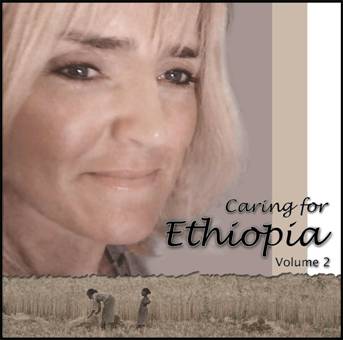 from the latest CD “Caring For Ethiopia” Vol 2 will therefore support this department - support which is endlessly important as without our help a fistula woman in this area would not be able to get the necessary treatment she needs.
100% of all collections will be handed over directly to NLM (The Norwegian Lutheran Mission) in Addis Ababa and from there paid to the hospital in Arba Minch after receipt received on work performed. NLM managed this hospital lead by DR Bernt Lindtjørn until the summer of 2011 but it is now run by the Ethiopians themselves.
For details on how to donate to the project, please see the DONATE page (link at the top)

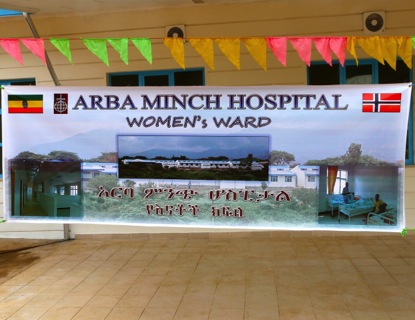
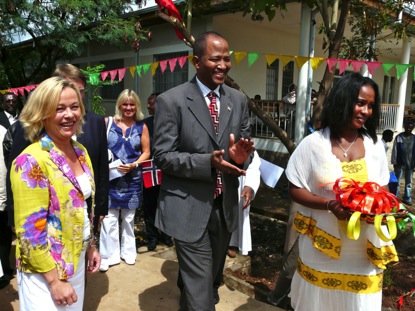
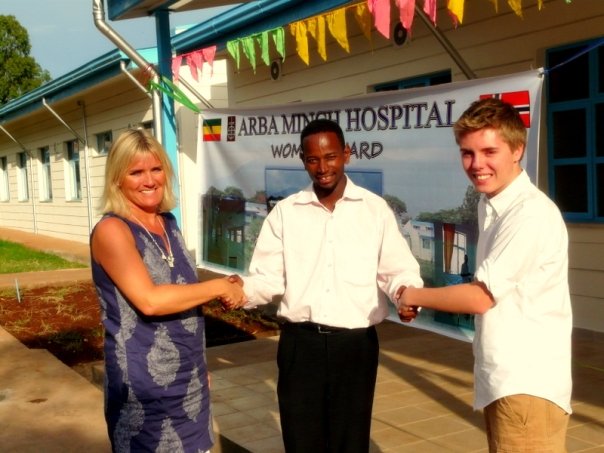
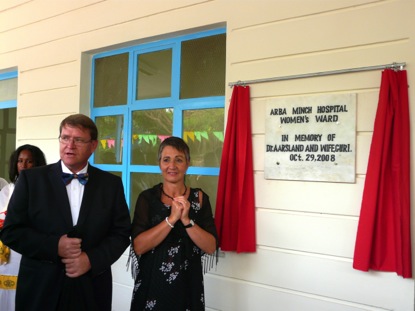 The new Women's ward at Arba Minch hospital was opened on the 29th of October 2008 by my cousin Gunvor. She is the eldest daughter of my uncle Åsbjørn and aunt Guri who served as a surgeon and a nurse respectively, but who died so tragically in a road traffic accident outside Kristiansand together with their grandson Isak (9) in 2003.